
March 25, 2024. MMIC Amplifiers

Yet another tool for your tool kit ~ The MMIC (Monolithic Microwave Integrated Circuit) Amplifier. The MMIC amplifiers are simply superb when looking for a module to add 20dB gain to a circuit, are termination insensitive, 50 Ohms in/out and low noise figure and good to 2GHz. 

I first used MMIC amps in a bilateral 20M SSB Transceiver way back in 2010 and while it didn't make the cover of Rolling Stone it did make the cover of QRP Quarterly.


By far the biggest hurdle with using MMIC amplifiers is that they are surface mount and really small. They are incompatible with glue down Manhattan pads, Fat Fingers and require steady hands. Careful circuit layout is also a must!


12 Sq In. and 50% of a SSB Transceiver, A steered module with IF, PD/BM, Rx/Tx Mixer
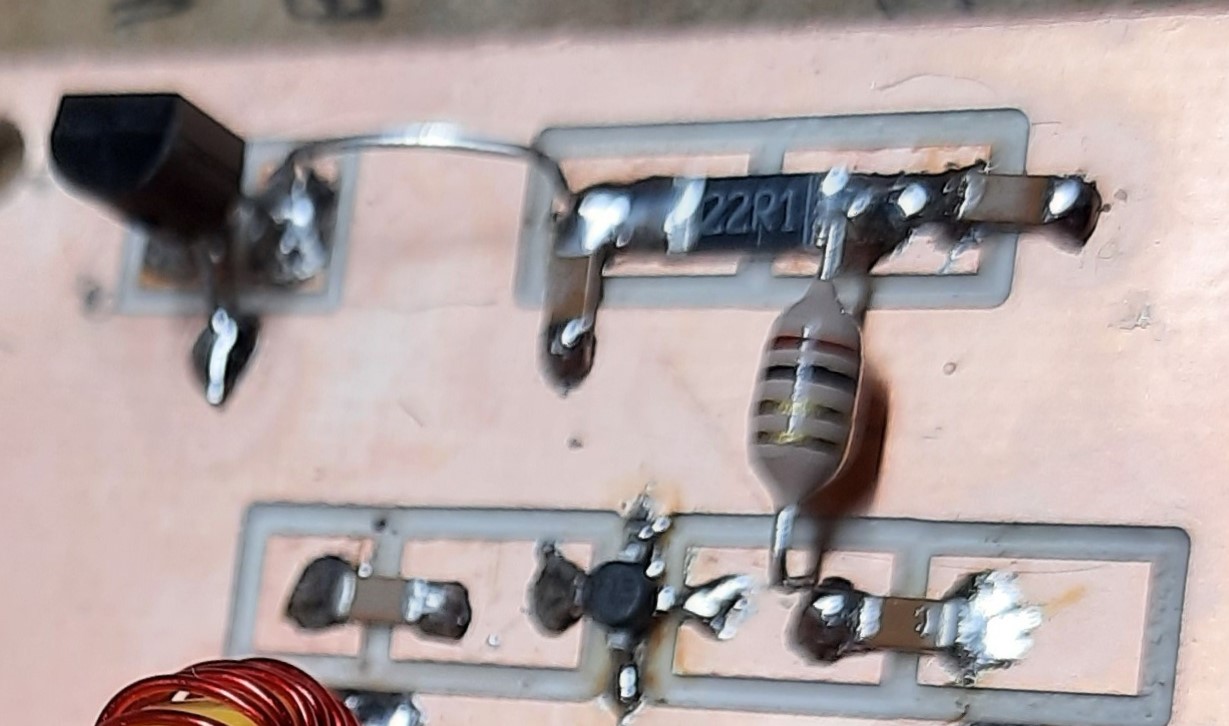


My AG393-86G MMIC Amplifier


The devices you see above are Tri-Quint AG303-86G's which are now obsolete. BUT Mini-Circuits sells the MAR-6SM+ which is DC to 2GHz, with 20dB gain and a 2.3 dB Noise Figure with an application circuit shown below. For less than $20 you can buy 10 units at Digi-Key.

The MAR-6SM+ operates with 3.5 VDC but the table shows the dropping resistor needed for various voltages. The Mini-Circuit devices draw about 16ma. I used a 1uH choke with the Tri-Quint devices and the caps are 20nF. The supply voltage on my application was 5VDC.


Aside from that 1st project in 2011 I have used MMIC devices in several SSB Transceivers especially where space and performance were a concern.

MMIC's are for the more advanced homebrewer since they are SMD and are way beyond the Ugly or Manhattan style of construction. But then again, their specifications and SMD size suggest a perfect balance for a minimalist yet feature packed radio. 
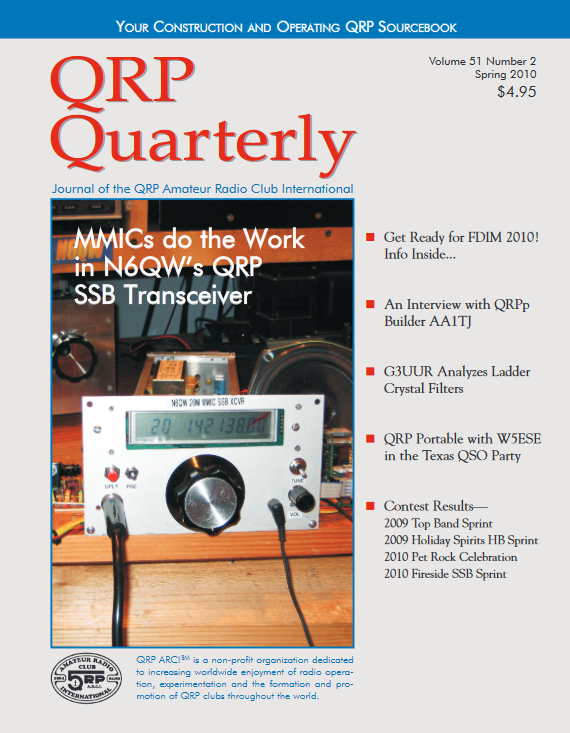
The MMIC 20M SSB on the Cover of QRP Quarterly!


Yet another tool for your kit.

73's 
Pete N6QW

PS I have been collecting some important topic data. It appears the blog readers are focused on simple project style posts and bypass anything Raspberry Pi or digital communications modes. I got the message!


Popular posts from this blog

January 26, 2024. A simple CW Transceiver/Transmitter

Cruise through the lower part of the ham bands bands and what do you hear? Well, FT-8 and CW. Often you will not hear any SSB stations yet go to the lower part of the bands, and it is a cacophony (I love that word) of bad sounding signals and some high-speed keying. Fast is not so much of the issue as is bad, run together and jerky keying. But none the less our hobby started there.    So, you could crank down your ICOM 7300 and watch the waterfall on CW or you could homebrew a radio. Actually, to do CW right you need more thought up front than you do with a SSB transceiver. Often, I will state that a CW Transceiver is much more difficult to build than a simple SSB rig. I published two articles in QRP Quarterly on CW transceivers and all I got was a yawn so maybe history will repeat itself.  Yawn!   30M CW Transceiver with RIT!   Of interest is that the LO is a Varactor tuned LC oscillator using a NE602. Look closely at the RIT circuit which is only activated on ...

March 31, 2024. Happy Easter to those who celebrate this day.

What a great day to Binge on Chocolate and experience the pain of that filling that has been leaking.  I would be in that category with the leaking filling(s) had I not just spent an amount equivalent to one of the fancy new uptown appliance box transceivers on two filling repairs. Well at least I can binge on the Chocolate bunnies without fear of pain. Regrettably everything appears to have jumped in price including the price of parts. Well not so much the parts as the shipping costs.  That notably is seen in the eBay treasures. I spotted a nice heathkit DX-20 for about $50 and the shipping was $65. Likely it is a twofer with part being a way to in effect charge a higher price by inflating the shipping and in part by increased shipping costs. Shipping with insurance across the US was about $150 for this jewel and that was three years ago. 6AM on the Left Coast ~ 20M Easter Sunday! My only hope is the cost of Chocolate Bunnies remains steady although a pound of See's Candies f...

August 30, 2024. A PNP 20M SSB Transceiver

Shown below is the Block Diagram for the 20M PNP SSB Transceiver steered in the  Transmit Mode . The components shown in the dotted block are relay steered so that the block module is single pass and amplifies in a single direction. The Block diagram show steered in Transmit.  Essentially the steering process works so that the IF Module input follows the Balanced Modulator on Transmit and then the input side follows the Receive Mixer on Receive. All done with some relays and a bit of RG174U coax. For those who count things in detail, this block diagram is not unlike what was used for the PSSST Transceiver which can be found on my website . Yes, a warmed over P3ST only using PNP devices. TYGNYBNT. 73's Pete N6QW